What Dromoland Castle’s €55m Transformation Signals for Historic Hospitality
Market Note | 10 November 2026
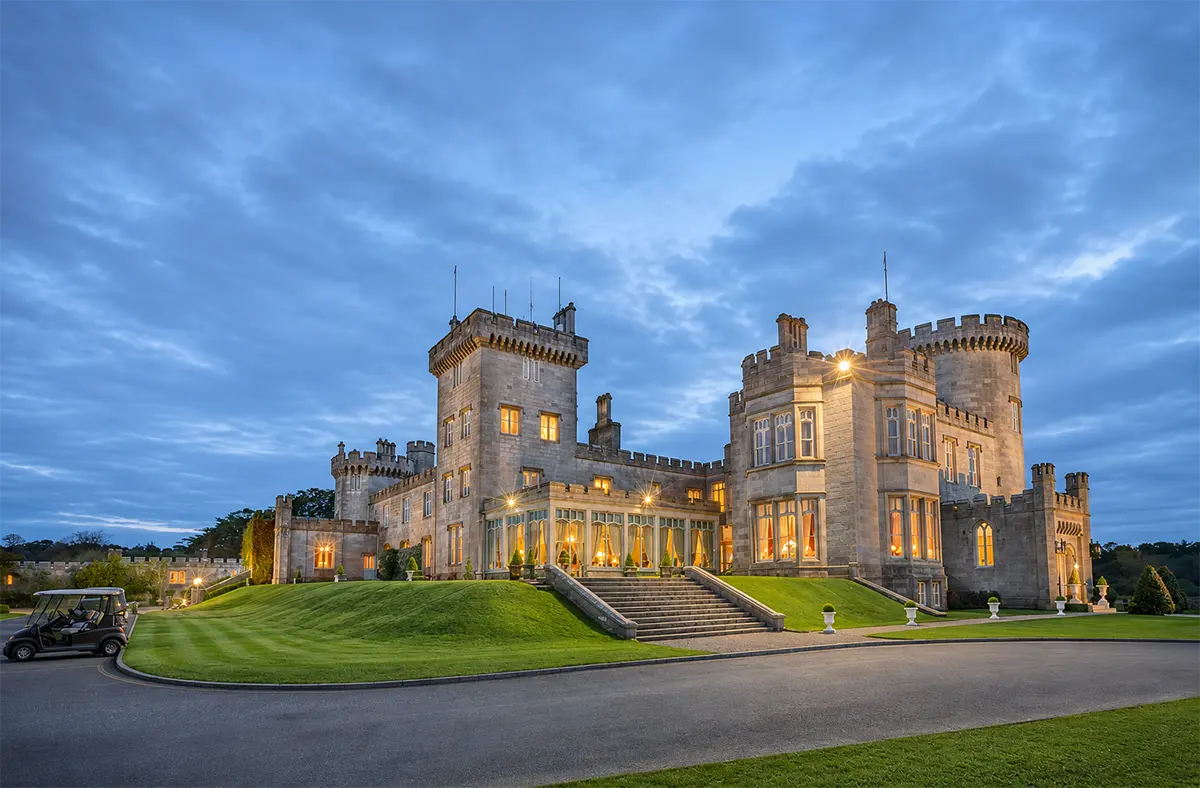
Dromoland Castle closed on 9 November for a six-month redevelopment. The announced €55 million programme is the largest transformation of the County Clare estate since it first welcomed guests as a luxury hotel in 1963.
What is confirmed
Dromoland Castle says the project will take the hotel from 96 to 121 rooms and suites, renew its public and event spaces, add new dining concepts, expand wellness and introduce further cultural programming across the estate.
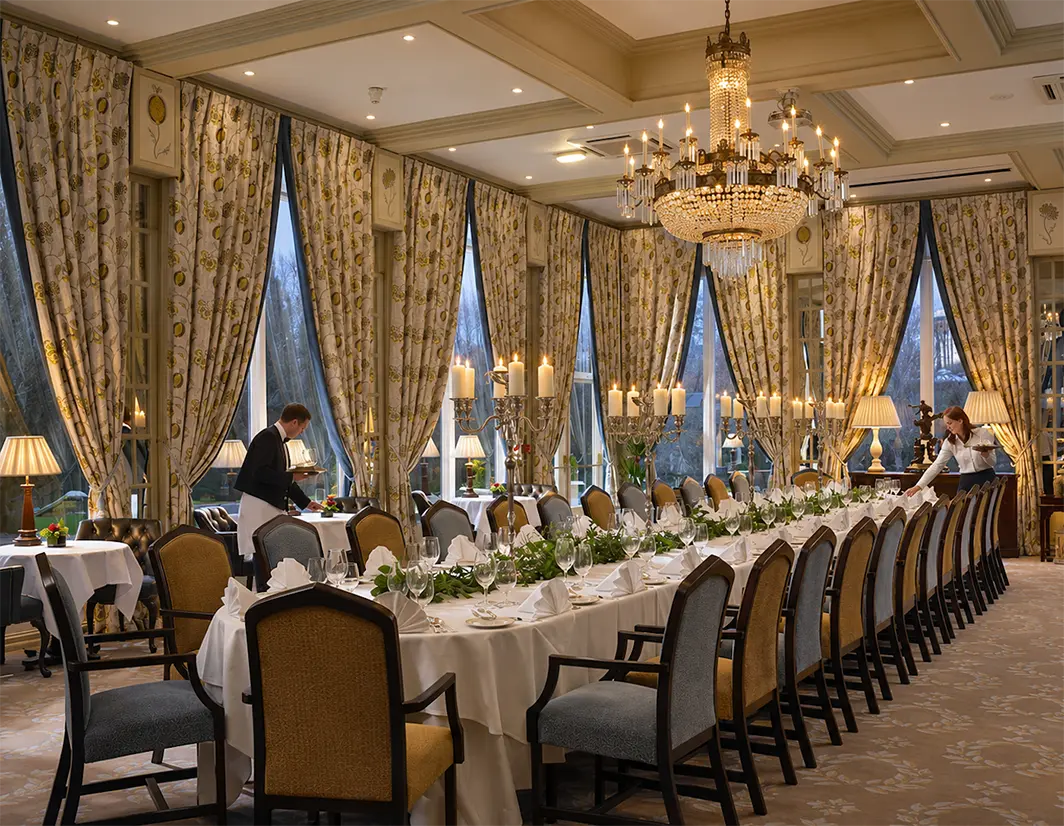
Among the announced elements are a 3,200-square-foot glass-enclosed atrium in the historic courtyard, a new Grill restaurant, a farm concept supplying the estate’s kitchens, a refurbished ballroom, two lakeside saunas and new ways for guests to engage with Irish language, craft and countryside traditions. The Castle is closed until June 2027; the atrium is scheduled to open in July 2027. The private lodges, golf course, golf facilities and leisure centre remain open during the closure.
These details are confirmed in Dromoland Castle’s redevelopment announcement and the Tourism Ireland release dated 8 September 2026.
Our reading
The significance of the investment is not only its scale. It is the decision to treat the castle, its landscape and the time spent within them as one hospitality experience.
Architecture remains the reason to notice a historic estate. But architecture alone does not create a complete stay. Dromoland’s announced mix places equal emphasis on where guests sleep, how they gather, what they eat, how they spend the day and how the wider estate enters the experience.
For Freire & Co., that direction matters across private stays, arranged journeys and celebrations. The historic setting creates expectation; the coherence of life around it determines whether the place feels merely impressive or genuinely alive.
Dromoland is one estate in one market, and an operator announcement is not evidence of guest response or commercial return. It would be too early to call this a universal shift. The investment instead makes Dromoland’s own operating thesis visible: the next chapter of the estate will rely not on heritage as scenery, but on heritage made inhabitable through hospitality.
