Europe’s Entry/Exit System and Destination Wedding Travel
Market Note — October 26, 2026
Europe’s Entry/Exit System was created to modernize the external borders of the Schengen area. The European Union describes EES as an automated system that registers non-EU nationals traveling for a short stay each time they cross the external border of a participating European country.
That is the fact. The more immediate planning question is what happens when the system meets an airport operating at full capacity.
Longer processing is no longer theoretical
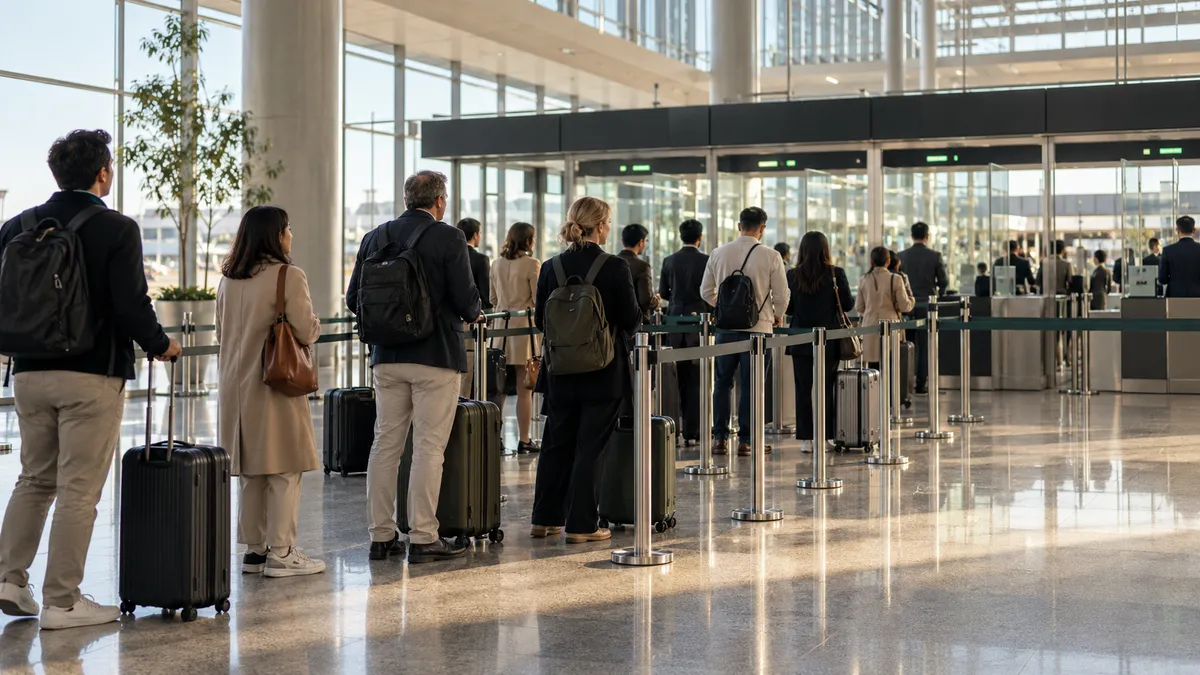
On October 23, Brussels Airport announced another expansion of its border-control infrastructure. The airport says that processing an arriving visa passenger during the morning peak now takes two to three times longer because of EES registration. It also reports that waits of two to four hours occur regularly at several European airports.
This does not mean that every American or British guest will spend four hours at passport control. The airport, arrival time, nationality and previous EES registration all matter. It does mean that the old assumptions about arrival timing deserve reconsideration.
A queue can alter the first event
For an ordinary holiday, a long queue is an inconvenience. For a destination wedding, it can affect a welcome dinner, a family gathering, a rehearsal or the only sensible transfer to a country estate.
The risk is not only a late arrival. A delayed guest may miss a shared transfer, separate from the rest of the family or begin the weekend by asking the hosts to solve a problem that the schedule left no room to absorb.
Our view
Key guests should no longer arrive in Europe on a schedule that works only if everything goes perfectly. Whenever possible, the couple and immediate family should enter the Schengen area at least two days before the ceremony. Guests arriving on the day of the first event should be given a generous margin between landing and any fixed engagement.
Luxury is often described through rooms, flowers and dinner tables. Sometimes it is something less visible: enough time for the journey not to become the story.